Why Are My Facebook Ads Costs Rising? How to Spot Rising CPM and Ad Fatigue
The short answer: rising Facebook Ads costs are a CPM or a frequency problem
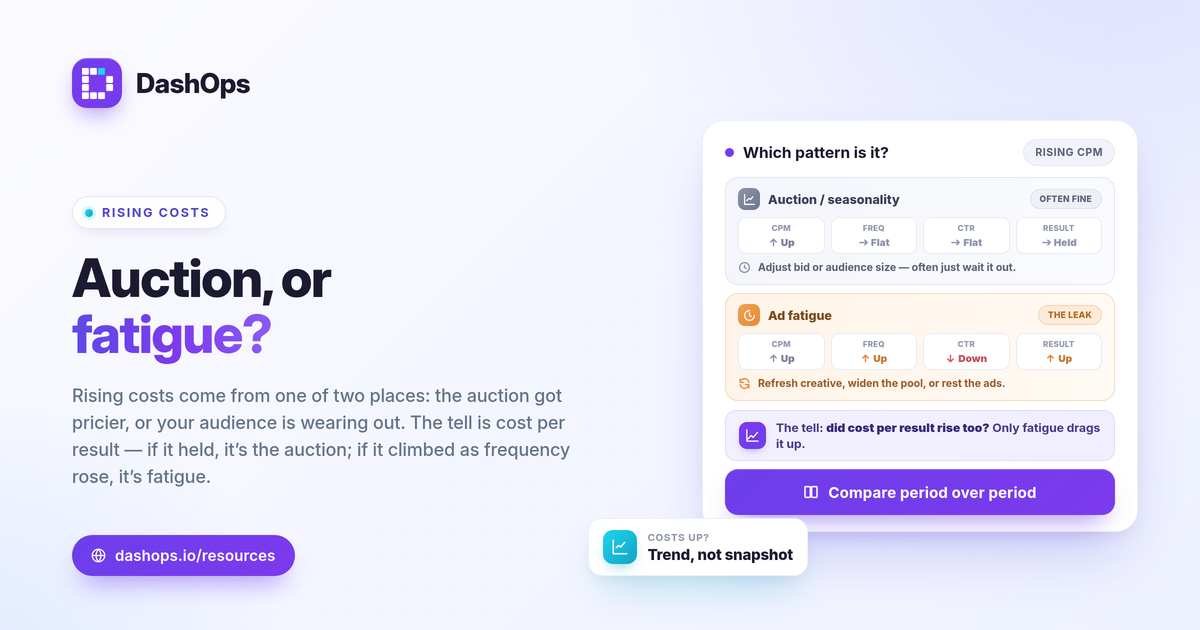
Facebook Ads costs usually rise for one of two reasons: the auction got more expensive (a higher CPM), or your audience is wearing out (ad fatigue showing up as rising frequency). The fastest way to answer “why are my Facebook Ads costs rising” is to compare this period to the previous one across CPM, frequency, and cost per result, then see which moved. CPM tells you what it costs to reach people; frequency tells you whether you are reaching the same people too often. When both climb while results soften, you are looking at fatigue, not a settings glitch. Below is how to read each signal and catch the drain before it eats your budget.
Separate a rising CPM from a rising cost per result
These are different problems with different fixes, so look at them separately first.
- CPM (cost per 1000 impressions) is what the auction charges to put your ad in front of people. The formula is CPM = spend / impressions times 1000. It moves with demand, seasonality, audience competition, and how narrow your targeting is.
- Cost per result is what you pay for the outcome you actually want, whether that is a purchase or a lead. It depends on CPM and on how well your ad converts the people it reaches.
A rising CPM is not automatically bad. If CPM goes up but your cost per result holds, you are paying more to reach people who convert better, so the math still works. The problem is when both rise together: you are paying more to reach people and getting less back. That gap is where budget quietly leaks. For a refresher on how these metrics relate, see CPM vs CPC in Meta Ads.
Read frequency to spot ad fatigue
Ad fatigue is what happens when the same audience sees your ads so often that they stop responding. Frequency is the metric that exposes it. Frequency is the average number of times each person in your reach saw your ads over the date range, and it is a real KPI you can track period over period, not a guess.
Watch for this pattern across two comparable periods:
- Frequency climbing. The same people are seeing the ads more times.
- CTR slipping. Fewer of those impressions turn into clicks.
- CPC and cost per result rising. Each click and each conversion costs more.
When those move together, that is ad fatigue frequency in action. Meta is spending your budget showing ads to people who have already decided not to act, so the auction extracts more for every result. A single high frequency number on its own does not prove fatigue. The trend across periods does. To understand how reach, impressions, and frequency fit together, see reach vs impressions vs frequency.
Use period-over-period comparison, not a single snapshot
One week of numbers cannot tell you whether a Meta Ads cost increase is normal noise or a real trend. CPM trend analysis only works when you put two comparable windows side by side.
- Compare like for like. This month against last month, or this week against the week before, so seasonality and day-of-week effects roughly cancel out.
- Line up the metrics that move together. CPM, frequency, CTR, CPC, and cost per result in one view, for the same two periods.
- Look at direction, not just the latest value. A frequency of a given level matters far less than whether it is rising and dragging results down with it.
This is also why a static export struggles here. A spreadsheet pulled once shows a moment, not a movement. A dashboard that holds period-over-period comparison lets you see the slope. For more on that difference, see Facebook Ads Manager vs a reporting dashboard.
A simple diagnosis checklist
When costs rise, run through these in order before you touch budgets or pause anything.
- Did CPM rise but cost per result hold? Likely auction or seasonality, not your creative. Often you wait it out or adjust bidding, not the ad.
- Did frequency rise while CTR and cost per result got worse? That is fatigue. The audience needs new creative or a wider pool.
- Did spend jump without results following? Check pacing. A budget that delivered faster than planned can inflate cost per result for the window.
- Did results fall but Meta reporting looks fine? Remember that conversions can be undercounted because of iOS and App Tracking Transparency, which causes Meta to attribute fewer results than actually happened. That is a reporting effect, not always a real cost spike. See iOS Facebook Ads underreporting.
Working through this list keeps you from yanking a campaign that is fine or feeding budget into one that is fading.
What the numbers point you toward
The diagnosis decides the fix, which is why reading the trend first matters more than reacting to any single figure.
- Auction-driven CPM rise. Revisit bid strategy and audience size. A very narrow audience competes against itself and pays a premium.
- Fatigue. Refresh creative, broaden the audience, or rest the existing ads so frequency can fall.
- Pacing distortion. Smooth delivery so spend does not front-load and skew your cost per result for the period.
For the wider set of metrics worth watching every week so these shifts never surprise you, see Meta Ads KPIs to track.
Where DashOps fits
DashOps reads spend, CPM, frequency, CTR, CPC, and cost per result across your Meta ad accounts in one dashboard, with period-over-period comparison built in, so a rising CPM or climbing frequency shows up as a trend instead of a surprise at month end. Demographic and placement breakdowns help you see which segment is fatiguing, and you can hand clients a clean read-only or white-label view of the same story. See what each plan includes on the pricing page, and the help center walks through connecting an account.
The takeaway: rising Facebook Ads costs are a question about trend, so compare two periods on CPM and frequency before you change a thing.
Frequently asked questions
Why are my Facebook Ads costs rising even though nothing changed in my account?
What frequency means my Facebook Ads have fatigue?
Is a rising CPM always a problem?
See it in your own dashboard
DashOps brings Meta Ads reporting, campaign management, and white-label client portals into one place. Pick the plan that fits how you run ads.