What Is Frequency in Facebook Ads and What Is a Good Frequency?
What frequency means in plain terms
Frequency in Facebook ads is the average number of times each person saw your ad over a given date range. It answers a simple question: how often is the same audience seeing the same thing. The frequency formula in Meta ads is straightforward: frequency = impressions / reach. If your ad earned 30,000 impressions across 10,000 reached people, your frequency is 3, meaning the average person saw it three times. Frequency is not a vanity number. It is one of the clearest early signals of ad fatigue, and watching it over time tells you when an audience is getting worn out before your cost per result does.
How frequency relates to reach and impressions
Three numbers sit together and are easy to confuse:
- Reach. The number of unique people who saw your ad at least once.
- Impressions. The total number of times your ad was shown, including repeats to the same person.
- Frequency. Impressions divided by reach, so the average exposures per person.
Because frequency is derived from the other two, it moves in predictable ways. If reach stops growing but impressions keep climbing, you are showing the same ad to the same people more often, and frequency rises. That usually happens when your audience is small relative to your budget, or when the campaign has been running long enough to saturate the people most likely to respond. For a fuller breakdown of how these three differ, see reach vs impressions vs frequency.
What is a good frequency for Facebook ads
This is where most advice gets it wrong by naming a single magic number. There is no universal good frequency for Facebook ads, because the right level depends on your offer, audience size, campaign objective, and how long you intend to run. A short retargeting push to warm buyers tolerates a higher frequency than a cold prospecting campaign aimed at a broad audience. A complex or high-consideration product may even need repeat exposure to land.
Instead of chasing a number, judge frequency against your own results:
- Compare it to your prior period. If frequency is creeping up week over week, note whether your cost per result is holding or climbing alongside it.
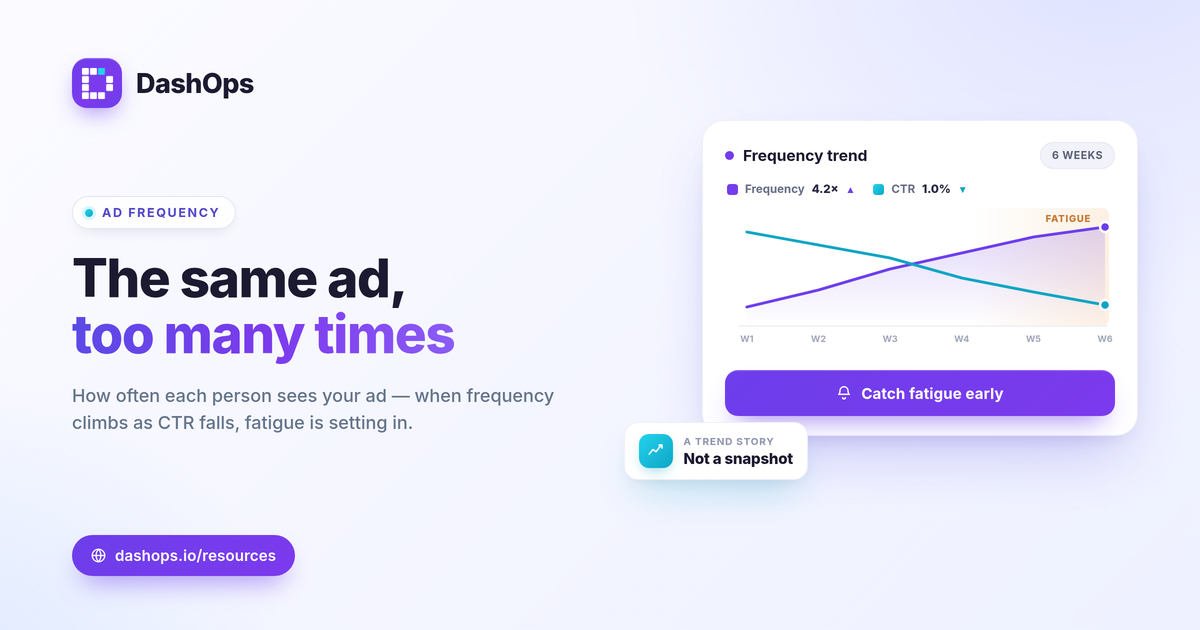
- Watch it next to CTR. When frequency rises and click-through rate falls in the same window, the audience is tiring of the creative.
- Tie it to your margin. The ad fatigue frequency threshold that matters is the point where rising exposures stop paying for themselves. That point is specific to your economics, not a benchmark.
In short, a good frequency is one that keeps your cost per result stable. The moment higher frequency starts dragging efficiency down, you have found your ceiling for that audience and creative.
How frequency signals ad fatigue
Ad fatigue is what happens when people have seen your ad enough times that it stops working. Frequency is the leading indicator. The pattern is consistent and worth memorizing:
- Frequency rises as the same people see the ad repeatedly.
- CTR drops because repeat viewers are less likely to click.
- CPM and cost per result tend to rise as relevance fades.
The useful move is to watch these together rather than in isolation. A frequency of 4 is not automatically a problem. A frequency of 4 with a falling CTR and a climbing cost per result is. Reading the three lines side by side over a period-over-period comparison turns a vague hunch about fatigue into something you can act on. For the wider set of numbers worth monitoring, the Meta ads KPIs to track guide lays them out.
How to lower ad frequency
When frequency has climbed past the point of efficiency, you have a few practical levers:
- Refresh the creative. New images, video, and copy reset the experience for the same audience, which is often the fastest fix.
- Expand or change the audience. A larger or new audience spreads impressions across more people, pulling the average down.
- Exclude recent converters and engagers. Stop spending repeat impressions on people who already acted.
- Cap delivery where the objective allows. Some campaign types let you set a frequency cap directly.
- Reallocate budget away from saturated ad sets. Pause the tired ones and feed fresh ones instead.
After any of these changes, keep watching the frequency line. If it starts falling and CTR recovers, the fix is working. If frequency keeps rising, the audience is still too small for the budget and needs widening.
Why reporting matters more than a one-off check
Frequency is a trend story, not a snapshot. Checking it once tells you almost nothing. Tracking it across weeks, next to CTR and cost per result, tells you exactly when an audience is wearing out and whether your last creative refresh helped. Pulling these numbers manually from Ads Manager every few days is slow and easy to skip, which is how fatigue quietly drains a budget. A dashboard that keeps the history in front of you removes that friction. For more on why a reporting view beats living inside Ads Manager, see Facebook Ads Manager vs a reporting dashboard.
DashOps reads frequency as one of its 17+ Meta KPIs, shown with period-over-period comparison and trend charts so you can see fatigue building rather than discovering it after the fact. The same view sits alongside demographic and placement breakdowns, top campaigns, and spend pacing, and it works across multiple ad accounts in one place. See what each plan includes on the pricing page, and the help center covers setup.
The practical takeaway: do not hunt for a perfect frequency number, watch frequency rise alongside CTR and cost per result, and act the moment those lines tell you the audience has had enough.
Frequently asked questions
What is frequency in Facebook ads?
What is a good frequency for Facebook ads?
How do I lower ad frequency?
See it in your own dashboard
DashOps brings Meta Ads reporting, campaign management, and white-label client portals into one place. Pick the plan that fits how you run ads.